



Modified Alkyd Resins
General
The standard alkyd resins may be modified, by either condensation reactions or addition reactions, to provide surface coatings resins with enhanced properties more suited to specialised applications. Alkyds thus modified may be either air-drying types, those that require a catalyst or other reactive polymer, or those that require subsequent drying in a heated oven, to produce the final coating.
Chain Stopped Alkyds
I debated whether to put chain stopped alkyds in the section on alkyds, as the chemistry is very similar, or modified alkyds, but finally chose the later. Medium and short oil alkyds can be modified to provide somewhat similar resins but with their properties chemically altered for specific applications. The alteration to the resin is, as the name implies, by a chemical process known informally as 'chain stopping'. The monomers used in standard alkyds (long, medium and short) are typically those that are 'multifunctional' in that each molecule added to form the polymer contains more than one reactive group. In this way the acids and bases form long polymer chains such as -A-B-A-B-A-B-A-B-, where A is a difunctional acid and B a di, or multifunctional, base. If the reactants were added in equal ('stoichiometric' - i.e. a 1:1 ratio) quantities then the polymer would end up (theoretically) being infinitely large and not soluble in any solvent, described as a 'gel' in resin terminology. Thus it is necessary to ensure that more of one component is added such that the reaction can go so far, and no further. In the majority of alkyds the base (hydroxy containing monomer) is added in excess such that the polymer resembles something akin to -B-A-B-A-B-A-B- with little to no additional acid available for further reaction. As the resin polymer is terminated by a base these resins are called 'hydroxy terminated' resins. Another way of terminating the reaction is by adding a monofunctional monomer, a molecule with only a reactive group. Benzoic acid is one monomer frequently used as a monoacid in these reactions. If we represent benzoic acid by 'BA' then the polymer chain might look something like -B-A-B-A-B-A-B-BA, where the benzoic acid prevents the chain from extending to the right whilst the left side is terminated by the normal hydroxy group.
The chain stopped alkyds are produced in an identical manor to the standard alkyds except that the 'chain stopper' is added during the condensation reaction, along with any other ingredients. The addition of monoacids, like benzoic acid, not only reduces the viscosity of the final resin but also increases the hardness of the dried resin (coating) film. The lower viscosity of the chain stopped alkyds provides coatings with enhanced coating film thickness and roughly half the touch dry time of the equivalent alkyd of the same oil length and composition.
Another reason to add a 'chain stopping monomer' to a resin is to reduce the overall functionality of the resin. If the functionality of either the base or acid monomers exceeds 2, then branching of the polymer will occur. If this is undesirable, a chain stopping monomer can be used to reduce the functionality of either acid or base.
Chain stopped medium oil alkyds are normally supplied in white spirits or similar aliphatic solvent and used for brushing or spray primers and enamels for mild steel coatings, particularly machinery and agricultural equipment.
Oxidative drying, chain stopped short oil alkyds, are used in fast drying industrial coatings, applied by spray or mechanical roller, in the same applications as those of the styrenated alkyds below. They do, however have superior UV, yellowing and crack resistance, improved adhesion to mild steel, as well as shorter periods before they can be overcoated, than do the styrenated alkyds.
Chemistry
Chain stopped alkyds follow the same formulating and processing principles as do the standard alkyd resins and are simply alkyds that have an additional component, either a monoacid or monobasic component (ie. those monomers with either a single acid (carboxyl) group or a single alcohol (hydroxy) group). The choice of which monomer to use depends on what one is hoping to achieve. For the 'standard' hydroxyl terminated alkyds, a monoacid is used, for those alkyds designed to contain an excess of acid, then a monobasic monomer is used. The choice of monoacid/monobase is further limited to those acids/bases that have relatively high boiling points and/or azeotrope temperatures with water such that they do not condense over with the water or reaction.
The reasons for adding a monoacid 'chain stopper' like Benzoic Acid to an alkyd are either:
- To impart additional hardness to the resulting coating film Or
- To reduce the alkyd molecular mass and viscosity
The addition of these monomers be achieved by adding, along with the other raw materials, at the beginning of the process (if a single stage reaction) or at some later stage in the process, although there is normally little to gain from using the latter, or after the alcoholysis reaction (in a two stage processes)
The monomers generally used as chain stoppers are:
- Monoacids: Benzoic Acid, t-Butyl Benzoic Acid
- Monohydric Alcohols: High boiling point alcohols
Quantities of chain stopper used are normally in the vicinity of 5% to 10% by weight of raw materials charged. Lower quantities will have very little effect on the film hardness whilst higher quantities will result in alkyds of too low molecular mass (extending touch dry times).
Long oil alkyds are rarely chain stopped, especially with mono acidic monomers, as doing so will reduce the already low hydroxyl content of the completed alkyd, which not only affects pigment dispersion properties but also their water tolerance (if of importance). Long oil alkyds are traditionally used because of their flexibility and elongation properties. Adding chain stoppers will reduce the resin elongation which will also reduce the durability and weathering of the coating film
The alkyds that are usually subjected to chain stopping are the short and medium oil alkyds. Chain stopping these alkyds reduces the alkyd drying times (more specifically the 'touch dry' time) and imparts a greater hardness to the coating film. Touch dry times for medium oil alkyds can be reduced from circa 1½ to 2 hours to around 30 to 40 minutes, whilst short oil alkyds can exhibit reduced touch dry times from 1 hour to 10 to 15 minutes.
Vinylated Alkyds (including acrylated, styrenated and vinyl toluene modified alkyds)
Basic Chemistry of Vinylated Alkyds
Suggested background reference: Addition Reactions
The vinylated alkyds are probably one of the most misunderstood topics in solvent based modified alkyds. Over the years I have come across a lot of 'mystic' about how these products are designed and what factors affect their successful production. Ultimately, these products follow well known chemical formulation concepts and there are no 'magical' aspects to their manufacture. As with all (polymer) chemistry:
- If one uses the same quality raw materials
- In the same quantities
- Processes them in the same way
- Use prescribed manufacturing procedures and test methods
Then one will end up with a similar product every time.(I had originally put 'the same product' but small variations in parameters, for example uniformity of mixing, consistency of premix addition rate, or slight variations in temperature, can slightly affect the physical properties of the copolymer)
All three types of these modified alkyds are made by copolymerising a vinyl monomer onto an alkyd backbone containing some form of unsaturation. Examples of the three types under discussion here are as follows:
| Reaction Type | Monomer | Formula | Alkyd Reactive Group | Example | |
|---|---|---|---|---|---|
| Acrylation | Acrylic | 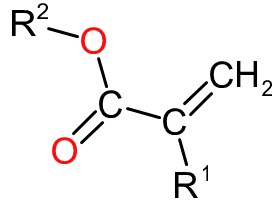 | Mono unsaturation (fumaric or Maleic acid in alkyd) | 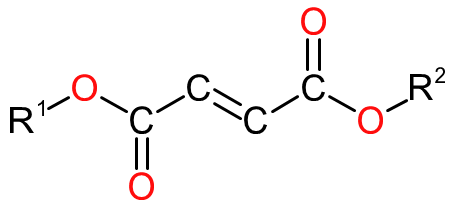 | |
| Styrenation | Styrene | 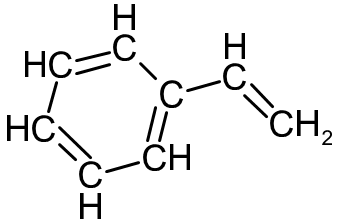 | Conjugated Dienes (e.g. Rumenic Acid from Dehydrated Castor Oil) | 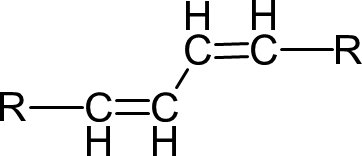 | |
| Vinylation | Vinyl Toluene | 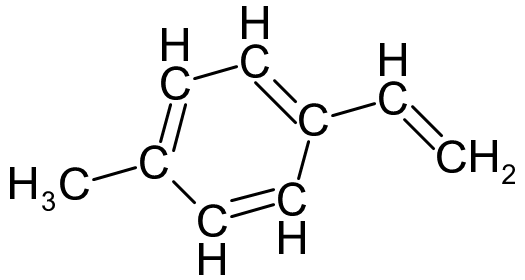 | |||
The generic reaction sequence as follows:

Figure 1 raises an interesting question: Does the peroxide radical first react with the alkyd diene group (as shown above), or with the vinyl monomer to form a vinyl free radical? Will a growing vinyl polymer chain free radical react with the allenic double bond on the alkyd, or does initiation begin with the peroxide reacting with the alkyd allenic double bond and subsequently vinyl monomer?
Or do both occur simultaneously?
The answer is the later, both. Thus there is most likely to be a combination of vinylated alkyd, vinyl polymer, as well as remnants of the original alkyd which has not formed a copolymer, in the final product.
Note that if all the conjugated diene in the alkyd was to be copolymerised with vinyl monomer during the copolymerisation reaction, then the vinylated alkyd would lose some of its air drying capability, which, in most cases, is undesirable.
There are fundamentally 3 different procedures to produce a vinyl alkyd:
- Vinylation of an oil prior to alcoholysis
- Vinylation during alcoholysis
- Vinylation of the alkyd, after the esterification reaction is complete and the alkyd formed
The first 2 procedures assume that one is dealing with an alkyd based on a specific oil that already posses the required unsaturation for copolymer formulation. Whereas the third refers to alkyds based on oils, fatty acids, or adding a mono allenic molecule (for example maleic anhydride or fumaric acid) to the formulation.
Of these approaches, the later is the more common due to inherent problems in the first two (such as the potential for depolymerisation of some of the vinyl chain formed at the high temperatures required for alcoholysis)
Acrylated Alkyds
It is mostly short oil alkyds that are modified with acrylic monomers to produce hybrid acrylated alkyds by copolymerisation. Where the acrylated alkyds differ from Styrenated and Vinyl Toluene modified alkyds is that the use of an acrylic monomer, such as butyl acrylate, methyl methacrylate etc, produces a hybrid copolymer that provides coatings with improved gloss, colour, colour retention and exterior durability and sometimes chemical resistance.
Acrylated alkyds do not oxidatively dry but require a 'catalyst' (co-reactant), such as melamine/urea formaldehyde, or an epoxy resin, to produce the final coating. The applied coating requires subsequent stoving (oven drying) to produce the final cured coating film unless a reactive isocyanate is used, such as in the preparation of a two component 'room temperature cured' coating for vehicle refinishing
The cost of acrylic and methacrylic monomers are much higher than that of styrene and thus the final acrylated alkyd is of higher cost. Because of the cost differential, the acrylated alkyds tend to be used in more demanding applications where coatings based on other resin types are not suitable. Most applications are in metal decorating applications, such as can coatings, drum coatings etc or in automotive refinish coatings where initial coating gloss and flow are more important than gloss retention and durability.
The applications where acrylated alkyd coatings are used dictates the formulation of the coating. For example, can coatings are normally applied by roller and subjected to heat curing to fully cure the finish, whereas acrylated alkyds used in automotive refinish are mixed with a suitable reactive polyisocyanate immediately prior to use.
Chemistry of Acrylated Alkyds
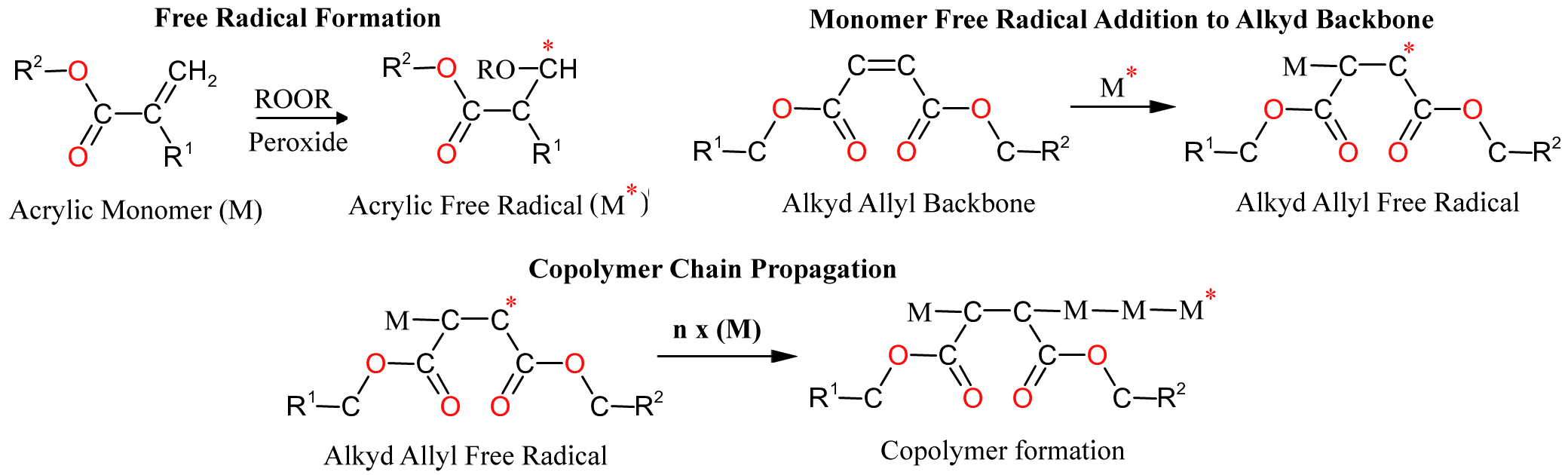
The acrylation of alkyds is somewhat similar to that of styrene and VT alkyds except that the alkyd backbone unsaturation is provided by organic monomers rather than unsaturation from the oil component itself. Common monomers used are fumaric acid or maleic anhydride, whilst the oil used would need to be of a 'non-drying' type to mitigate side reactions as outlined here: Other Reactions, particularly Diels-Alder reactions
A generalised reaction sequence is shown in figure 4 below:
Alkyd Component
The alkyd component is formulated as a Short Oil Alkyd but requires a quantity of an allylic group to form a copolymerisation site. These alkyd 'intermediates' are normally formulated to have an oil length of around 33% but this depends on the final performance characteristics required after producing the copolymer.
The more oil in the formulation (i.e. longer oil length), the softer, and more flexible, the final film for a given degree of acrylate/methacrylate copolymerisation. Conversely, the lower the oil content, the harder the copolymerised alkyd will be.
- Oil/Fatty Acid
- A non drying, low unsaturation content, type such as coconut or similar.
- Well refined fatty acids generally give superior colour.
- Glycol
- The most common glycols used in these products are Glycerine (Glycerol) or Trimethylol Propane (TMP)
- Glycerin is low cost and adds flexibility to the alkyd backbone
- TMP results in a harder alkyd intermediate but also one that has 3 primary hydroxyl groups for later reaction.
- Diacid
- An allyl diacid at circa 2% to 4% on solids (such as maleic Anhydride of Fumaric Acid)
- Phthalic Anhydride is the most common additional diacid, once again, it's fairly low cost
- For very specific copolymers for more advanced coatings, Isophthalic Acid might be considered
- Solvent
- Xylene (mixed) is predominantly used, perhaps in combination with a solvent ester to produce fast drying industrial coatings applied by spray or roller
The alkyd component is designed such that the terminal acid value provides the required acid and/or hydroxyl values after acrylation. For example, if one is designing an acrylated alkyd to contain 50% alkyd and 50% acrylic monomer one would design the alkyd to have a terminal acid value of 16 if the required final product acid value is to be 8mg KOH/g
Acrylic Monomer
- Methyl Methacrylate is possibly the most commonly used acrylic monomer as it adds hardness and weathering resistance. Alternatively butyl acrylate can be used if a softer copolymer is required and possibly hydroxy acrylic monomers to adjust the hydroxyl value of the copolymer
- Small quantities of allyl monomer in the alkyd backbone results in fewer active sites for the monomer to copolymerise with. If too large a ratio of acrylic monomer to allyl monomer is used, any excess may self polymerise to form individual polymer chains and potentially, a hazy end product.
- The ratio of acrylic monomer to alkyd is determined by the required performance characteristics of coatings derived from the copolymer. In general, increased ratios of acrylic monomer to alkyd component will result in improvements in coating properties such as faster touch drying, improved weathering, initial gloss and chemical resistance
Peroxide
There are a plethora of organic peroxides that can be used in the manufacture of acrylated alkyds so it is important to examine the manufacturers suggestions for a suitable peroxide based on the application. The choice of peroxide is mainly determined by the solvents used in the intermediate alkyd, preferably one that gives the required half life at the boiling point of the alkyd solvent (or solvent mixture). The reason for this is simple: As the solvent boils/evaporates, the cooled, returning solvent reflux from the condenser helps prevent the reaction temperature increasing. In other words the more energy produced by the reaction the greater the volume of solvent evaporating. The more solvent that evaporates the greater the volume of cold solvent flowing back into the reactor from the condenser thus stabilising the temperature.
For best finished product colour, the peroxide should be aliphatic in nature. Aromatic peroxides tend to add a yellow 'tinge' to the product colour. For example di-Tertiary-Butyl Peroxide (DTBP) would be preferred over Tertiary Butyl Perbenzoate (TBP) for best product colour.
The peroxide chosen must have a critical temperature (SADT - the temperature at which a given peroxide starts to generate free radicals) that will be below the reaction temperature
One should also note that the allyl group in the alkyd itself will be quite sterically hindered so it is presumed that the smaller peroxide free radicals would be more efficient at reacting with it to produce allyl free radicals.
A good starting point for the quantity of peroxide to be added is 2% of the acrylic monomer content. The quantity can be adjusted in subsequent laboratory trials to improve the copolymer physical properties as required.
Copolymerisation
The copolymerisation of the alkyd follows the following basic, generalised, procedure:
- The alkyd intermediate (alkyd polymer dissolved in a suitable solvent) is added to a stirred reactor and an inert gas applied.
- The alkyd intermediate is heated to a temperature that will provide a moderate reflux
- Only after ensuring all equipment is functioning correctly, add the acrylic monomer to the premix tank, followed by the peroxide, and mix adequately
- Add the premix to the reactor at a constant rate over the required addition period (e.g. 4 hours)
- Sample after completion of the premix addition
- Maintain the batch at reflux and sample at hourly intervals
- Hold for constant viscosity and solids, cool, then discharge
Some notes on processing
- It's essential to ensure that all equipment is functioning satisfactorily before adding the peroxide to the premix. If the peroxide is added to the vinyl monomer, and the reaction has to be aborted, then one ends up with a the problem of safely disposing of the monomer/peroxide premix which has a potential to exotherm if left for any prolonged period.
- The reaction temperature setting should be adjusted throughout to maintain a steady reflux. Initially the reaction temperature will drop as the 'cold' premix is added but will thereafter increase as the quantity, and molecular mass, of the copolymer increases
- The sample directly after premix addition is to ensure that nothing untoward is happening to the reaction mixture (e.g. gelation)
- Hourly sampling after premix addition allows one to 'track' the reaction progress
- Holding for constant viscosity/solids ensures that all the vinyl monomer has reacted.
- If the reaction becomes uncontrollable during premix addition, reduce or stop the flow of premix. Never cool the batch and continue premix addition. If premix addition continues, and the batch is subsequently reheated, an uncontrolled reaction can take place and thermal runaway occur with potentially catastrophic circumstances
Styrenated Alkyds
Styrenated alkyds are based on long and medium oil alkyds composed of oxidative drying oils and fatty acids. These resins are hybrid in nature and are co-reacted with styrene monomer, via an addition reaction, to produce the final resin. Although the presumption is that the final product is composed entirely of an alkyd backbone to which styrene is attached, the final products are generally a mixture of unreacted alkyd, styrenated alkyd and polystyrene chains.
The solvent used for styrenated alkyds is invariably a fast evaporating type, mainly xylene, although other aromatic and/or oxygenated solvents are also possibilities.
Coatings based on styrenated alkyds are utilised in coatings normally applied by spray or dip methods where the fast surface drying chacteritics allow rapid handling of the coated item after application. Touch dry times are normally of the order of 5 to 10 minutes, but where coatings are designed to produce 'hammer finishes', a slower drying styrenated alkyd (approximately 15 to 25 minutes surface dry) is used to allow the 'hammer' effect to develop before the surface closes (dries).
Styrenated alkyds generally contain from 20% to 40% of styrene by mass resulting in the original quantity of oil/fatty acid in the copolymer being lowered by the same margin. The lower quantity of drying oil in the final product reduces the number of active sites for oxidative cross-linking resulting in a decrease in the rate at which through drying occurs. One of the downsides of this is that it makes a freshly painted surface difficult to 'touch-up' unless done within approximately 4 hours of the original coating being applied. After ±4 hours, the oxidative cross-linking of the coating will have progressed to such an extent that the solvents used in the coating will often soften the previous applied coating but not dissolve it. When this happens, the softened film has a tendency to 'wrinkle' (also known as 'alligatoring').
The other 'downsides' of styrenated alkyds are that, because the films are very hard, they can chip fairly easily. Coatings based on styrenated alkyds also do not have very good exterior durability nor do they have very good yellowing resistance when subjected to dark conditions for prolonged periods.
Styrenated alkyd coatings are used as a temporary, 'transport', primer for mild steel, for example metal office furniture, bicycle frames and numerous other areas where a quick drying coating is required to ensure rapid handling of the final coated product, as required by assembly lines.
Vinyl Toluene (VT) modified Alkyds
Much the same can be said about VT alkyds that has already been said about the styrenated alkyds. They are produced in a similar way and they are used in similar applications. The difference between styrenated alkyds and VT alkyds is that the modification of the alkyd with vinyl toluene produces a polymer with improved solubility in low solvency aliphatic solvents which are slower evaporating, for example mineral/white spirits. The use of a slower evaporating solvent system means that the coatings dry slowly and can be used to produce coatings suitable for use by hand brushes or rollers Thus making them suitable for manually painting mild steel items, such as industrial or agricultural machinery.
Chemistry of Styrenated and Vinyl Toluene (VT) based Alkyds
Styrene and VT modified alkyds require an alkyd backbone based on an oil containing conjugated dienes such as Dehydrated Castor Oil (DCO) or specifically refined conjugated fatty acids. The reason being that there are few, if any, peroxides that are reactive enough to generate a free radical from a non-conjugated diene at the process temperatures normally used. Conjugated dienes also benefit from resonance stabilisation of the free radical produced as indicated below:

Alkyd Component
Alkyds formulated for the production of Styrenated and VT alkyds are generally long oil alkyds. Ref: Long Oil Alkyds
- The alkyd is normally formulated to give an oil length of approximately 60% to 70%, depending on the final performance characteristics required for the copolymer.
- The oil length will determine the hard dry and overcoating times of the copolymer as well as the ultimate hardness
- The more oil in the formulation, the softer, and more flexible, the final film, and the shorter the time before overcoating can begin
- Oil or Fatty Acid
- Should be a conjugated oil or fatty acid as previously explained
- The oil component might not necessarily be just a conjugated Oil or Fatty Acid but might also contain a secondary, non-conjugated Oil/Fatty Acid such as Soya or Linseed
- It is only necessary to use enough conjugated Oil or Fatty Acid to provide sufficient 'active sites' on the alkyd backbone for copolymerisation, hence why sometimes a mix of Oils/Fatty Acids are used to provide the required oil length (and reduce cost).
- Glycol
- The most common glycol to use for these products is Glycerine (Glycerol)
- Glycerin is low cost
- Glycerin adds flexibility to the alkyd backbone which counteracts the rigidity/hardness imparted by the comonomer (e.g. Styrene)
- Diacid
- Phthalic Anhydride is the most common as, once again, it's fairly low cost
- For very specific copolymers in more advanced coatings it should be possible to use Isophthalic Acid
- Solvent
- Xylene (mixed) is predominantly used for styrenated alkyds destined for fast drying industrial coatings applied by spray, dip or roller
- White Spirits (Mineral Turpentine) is predominantly used for VT alkyds designed for the production of brushing enamels.
When formulating the alkyd always pay attention to any possible side reactions, as outlined in Other Reactions, In particular, other reactants with double bonds, like maleic anhydride or fumaric acid, may undergo a Diels Alder reaction with any conjugated dienes present thus effectively reducing any conjugated diene sites for copolymerisation.
Copolymer Component
- Styrene is used in the formulation of Styrenated alkyds and Vinyl Toluene (VT) For VT alkyds
- The ratio of vinyl monomer to alkyd is determined by:
- The amount of conjugated diene in the alkyd component. If there is a small amount, there are fewer active sites for the monomer to copolymerise with. Excess vinyl monomer may polymerise to form homopolymer and potentially, a haze, if of high enough molecular mass
- The coating chacteritics required in the end application
- The higher the monomer content, the harder, and more brittle, the film will be
- The higher the monomer content the faster the touch dry time will be
- The higher the monomer content the more conjugated diene will be copolymerised
- The lower the amount of residual conjugated diene, the slower the oxidative drying and the longer the recoating time
- Quick drying (QD) industrial primers and enamels will generally contain 30% to 40% monomer by mass, whilst 20% to 30% monomer is used where a slower touch dry time is required (for example 'Hammer Finishes', to allow the 'texture' ("hammer") to form prior to the film surface 'closing')
Peroxide
There have been many peroxides utilised in the manufacture of styrenated and VT alkyds. The most frequently used method for styrenation is vinylation of the completed alkyd dissolved in a suitable solvent. For styrenated alkyds, this solvent is generally xylene (more precisely mixed xylene isomers) and white spirits (mineral turpentine) for the VT alkyds. During vinylation/copolymerisation, the alkyd is preferentially heated to the boiling point of the solvent (more on this later). Mixed xylenes have a boiling point of circa 137°C whereas White spirits is comprised of mixed aliphatics and aromatics and does not have a specific boiling point but rather a boiling range starting at around 137° up to around 230°C.
The peroxide chosen should have a suitable critical temperature and 1/2 life based on the expected boiling point of the solvent. di-Tertiary-Butyl Peroxide (DTBP) has a critical temperature (the temperature at which the peroxide starts to thermally form free radicals) of 80°C and a 1/2 life of 1 Hr at 141°C, so is quite suitable for use with formulations under these conditions.
One should also note that the conjugated dienes in the alkyd itself will be quite sterically hindered so it is presumed that the smaller peroxide free radicals would be more efficient at reacting with them.
A good starting point for the quantity of peroxide to be added is 2% of the monomer content. The quantity can be adjusted in subsequent laboratory trials to improve the copolymer physical properties if necessary.
Copolymerisation
The copolymerisation of the alkyd follows the following basic, generalised, procedure:
- The alkyd intermediate (alkyd polymer dissolved in a suitable solvent) is added to a stirred reactor and inert gas applied.
- The alkyd intermediate is heated to a temperature that will provide a moderate reflux
- Only after the reactor is functioning correctly, add the vinyl monomer to the premix tank, followed by the peroxide, and mix adequately
- Add the premix to the reactor at a constant rate over the required addition period (e.g. 4 hours)
- Sample after completion of the premix addition
- Maintain the reactor at reflux and sample at hourly intervals
- Hold for constant viscosity and solids, cool, then discharge
Some notes on processing
- It's essential to ensure that all equipment is functioning satisfactorily before adding the peroxide to the premix. If the peroxide is added to the vinyl monomer, and the reaction has to be aborted, then one ends up with the problem of safely disposing of the monomer/peroxide premix which has a potential to exotherm if left for any prolonged period.
- The reaction temperature setting should be adjusted throughout to maintain a steady reflux. Initially the reaction temperature will drop as the 'cold' premix is added but will thereafter increase as the quantity and molecular mass of the copolymer increases
- The sample directly after premix addition is to ensure that nothing untoward is happening to the reaction mixture (e.g. gelation)
- Hourly sampling after premix addition allows one to 'track' the reaction progress
- Holding for constant viscosity/solids ensures that all the vinyl monomer has reacted.
- If the reaction becomes uncontrollable during premix addition (e.g. highly exothermic), reduce or stop the flow of premix. Never cool the batch and continue premix addition. If premix addition continues, and the batch is subsequently reheated, an uncontrolled reaction can take place and thermal runaway occur with potentially catastrophic circumstances
Quality problems
- Batch does not meet physical specification - adjust the formulation as per the guiding principles above
- Batch is hazy
- There are insufficient conjugated diene sites available for copolymerisation. This can be due to:
- Too high a ratio of vinyl monomer to conjugated diene resulting in excessive quantities of vinyl monomer homopolymer formation
- The oil/fatty acid itself has too few conjugated diene sites, for example incomplete dehydration of dehydrated castor oil if used, or too little conjugated Oil/Fatty Acid if mixed Oils/Fatty Acids are used
- Incomplete reaction as the batch has not been held to constant solids/viscosity. Free monomer left after the batch has cooled will continue to polymerise slowly forming long chains of homopolymer which may be incompatible with the copolymer solvent and produce a haze on standing.
- There are insufficient conjugated diene sites available for copolymerisation. This can be due to:
Urethanated Alkyds
Appropriate long oil alkyds may be further modified with isocyanates, via an addition reaction, to produce urethane linkages and thus 'urethane alkyds'. The long oil alkyds used for this process are formulated in the same way that normal long oil alkyds are, although with a lower molecular mass and with more available free hydroxyl groups than is normally the case. The isocyanates used in this instance are those molecules that contain dual isocyanate groups, otherwise known as 'diisocyanates', whilst the rest of the diisocyanate molecule may be either aliphatic or aromatic in nature. The reaction of the diisocyanate with the available alkyd hydroxyl groups produces urethane linkages that 'bridge' the alkyd polymer chains together, thus effectively increasing the size of the polymer molecules, whilst maintaining polymer solubility in the customary aliphatic solvents. The reasons behind producing urethane alkyds is that the addition of isocyanate provides coating films with greater toughness and chemical resistance. The enhanced properties of the urethane alkyds make them more suitable for use where a higher degree of abrasion, water, or chemical resistance is required. Typical uses of coatings based on urethane alkyds are wooden furniture varnishes applied by brush (particularly table tops, where the urethane's water and heat resistance prevents water marks), alkali resistant plaster primers and concrete floor coatings, corrosion resistant primers, and any wooden items that require a more durable coating, such as skirting boards and doors.
As previously mentioned, the diisocyanate used in the manufacture of a urethane alkyd may have either an aromatic or aliphatic backbone. Urethane alkyds produced with aromatic diisocyanates are not suitable for exterior applications, whilst those aliphatic based diisocyanates are preferred for coatings for exterior use.
Chemistry of Urethane Alkyds
Alkyds are modified with isocyanates (normally diisocyanates) to improve the properties of a base alkyd. The alkyd base resin that is used in the formulation of a urethane alkyd has to be specifically designed to accommodate the addition of a diisocyanate. The addition of diisocyanates improves the following alkyd properties:
- The resultant coating hardness, durability and water resistance
- Reduction of the alkyd viscosity at a similar target molecular mass to a non-modified alkyd
- Aids adhesion and anti-corrosive properties when used in primers
There are two types of diisocyanate used:
- Aromatic Diisocyanates: such as 80/20 (80% 2,4 isomer and 20% 2,6 isomer) Toluene Diisocyanate (TDI). Produces hard durable films but not recommended in resins for exterior applications.
- Aliphatic Diisocyanates: such as hexamethylene diisocyanate (HDI) do not darken as much as aromatic diisocyanates, have superior exterior durability, but are more expensive than their aromatic equivalents.
The reaction sequence below is based on an alkyd intermediate containing pentaerythritol with a hydroxyl functionality of 4, associated diacid and fatty acid components (R¹ and R²), and 2,4 toluene diisocyanate. The reaction requires a temperature of between 70°C to 80°C and results in the formation of two urethane groups linking the two alkyd polymer chains together, effectively just over doubling the molecular mass over the individual polymer chains.

Alkyd Component
- The alkyd component is formulated along the general principles of standard Long Oil Alkyds Long Oil Alkyds except the oil length is generally somewhat higher at around 65 to 70% due to the later addition of isocyanate which will ultimately reduce the oil length of the urethan alkyd
- Oils and/or fatty acids used in urethane alkyds tend to be Soya Bean, Sunflower or Linseed. Linseed oil/fatty acid is preferred as it is classified as a 'drying oil' and thus produces films with faster through drying and hard dry properties.
- The hydroxyl proportion of the alkyd is increased over standard alkyds to allow for later reaction with a di-isocyanate which will also decrease the molecular mass, and thus viscosity, of the alkyd intermediate.
Solvent
The solvent used in the dilution of the alkyd stage (intermediate), in addition to the Urethane Alkyd itself, is invariably white spirits/mineral turpentine, or similar (mainly) aliphatic solvent as the applications for coatings made from Urethanes are generally slow touch drying to enable the coating to be applied by brush.
Isocyanate Component
- The isocyanate, as mentioned earlier, will generally be Toluene (TDI) or Hexamethylene Diisocyanate (HDI)
- The precise amount of isocyanate required must be stoichiometrically determined based on the hydroxyl value of the alkyd component.
- The amount of Isocyanate used is generally the same as, or less than, the stoichiometric hydroxyl equivalent. It is rarely ever in excess in these types of resins.
- Isocyanate levels are in the region of 4 to 10% by mass of final product providing final urethane alkyd oil lengths of around 60% to 67%
Alkyd Urethanation
- The alkyd intermediate is added to a reactor, fitted with an efficient condenser in 'total reflux' configuration, and heated to 70°C, with stirring, under an inert gas blanket
- A 'scrubber' is preferred on the outlet of the condenser to remove/entrap any isocyanate vapours.
- The required amount of isocyanate is added to a premix tank with an inert gas blanket
- The isocyanate is slowly added to the alkyd maintaining the reaction temperature above 70°C and less than 80°C.
- Once the addition of isocyanate has completed, wait at least one hour before sampling to reduce any free Isocyanate that may still be present
- Sample hourly thereafter until the viscosity and solids remain constant.
Some notes on processing
- All Isocyanates are extremely toxic and need to be handled with great care at all stages, not only during production, but also in-process testing of the urethane alkyd. Refer to handling requirements as specified by your government's Health and Safety guidelines
- The reaction is exothermic and cooling might be required to prevent the temperature rising excessively. If the temperature continues to rise above 80°C, immediately stop addition of Isocyanate until the temperature is brought back within limits, at which point the isocyanate addition can be carefully resumed.
- Due to its toxicity, free isocyanate in the final product will render the product unfit for use.
- A free Isocyanate test, such as ASTM D2572, for in-process testing and reaction/batch finalisation. The free isocyanate should be less than 1 mg/KOH/gram in the final product.
- It might be advisable to add a small amount, for example 0.2%, of an alcohol, such as butanol, when completing the batch. This is an additional precaution to reduce the possibility of any free isocyanate remaining (assuming the free isocyanate is already not more than 1 mgKOH/gram).
- If the urethane is correctly formulated, the product should be within specification on batch completion. If the solids/viscosity relationship is slightly out, adjust with solvent. Do not add additional isocyanate if the batch viscosity is low. Doing so can result in excess free isocyanate with associated problems as already mentioned. In such cases, the batch should be added to containers and worked away in subsequent batches at predetermined levels.